

Section 1 · Landmark guide
History & Stories
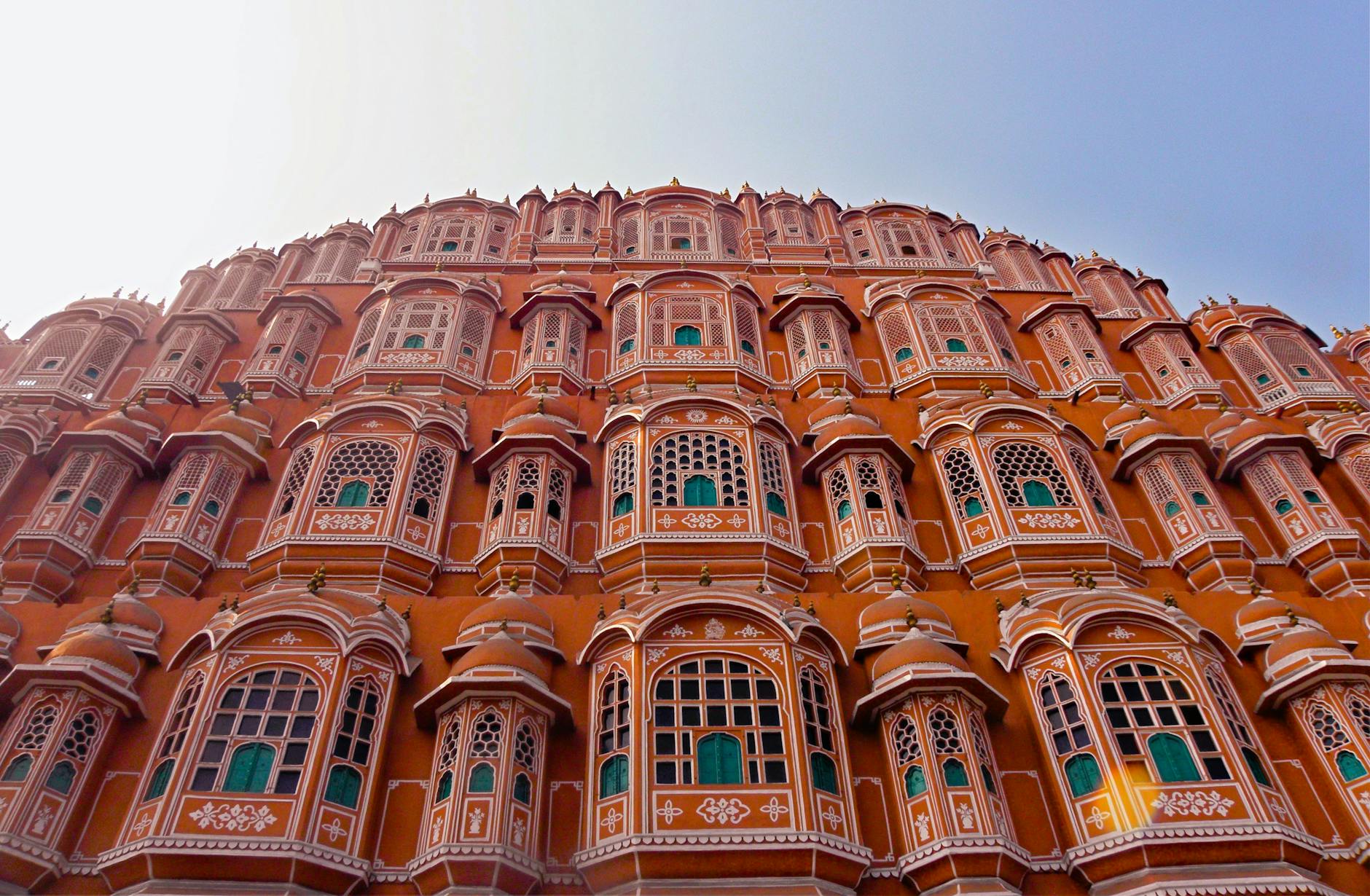
The Hawa Mahal, known as the "Palace of Winds," is an architectural masterpiece built of red sandstone by Maharaja Sawai Pratap Singh in the 18th century. Its unique five-story façade is pierced by 953 small windows called "jharokhas," which allowed the royal women to observe city life unseen, adhering to the customs of the era. The design draws inspiration from the crown of the Hindu god Krishna, reflecting local cultural influences. Notably, the structure features an ingenious natural ventilation system that keeps the palace cool even during summer, highlighting the craftmanship of the Rajput artisans.
Section 2 · Landmark guide
Visiting Tips & Logistics
For the best experience at Hawa Mahal, plan to visit early in the morning when sunlight beautifully illuminates its pink façade and crowds are thinner. Spending about 1 to 1.5 hours lets you explore the various windows and enjoy panoramic views over Jaipur. The site can be busy, especially during peak season, so it's advisable to check the latest access conditions and opening hours on the official website before your trip. Bring a camera or a smartphone with good battery life to capture the impressive architectural details.

Section 3 · Landmark guide
Getting There & Low-Impact Travel
Hawa Mahal is located in the heart of Jaipur and is easily reachable on foot from many hotels in the historic district. To travel sustainably, opt for walking or cycling, as Jaipur offers lively pedestrian zones and suitable sidewalks. Electric rickshaws and bike-sharing schemes are available in certain neighborhoods—verify current availability through local sources. Public buses also serve the area. Before your visit, consult an interactive map to plan the most comfortable and environmentally friendly route.

Section 4 · Landmark guide
Nearby Places to Explore
Close to Hawa Mahal, several attractions invite exploration. The City Palace, a royal residence reachable on foot, offers insights into royal history and stunning architecture. Adjacent to it is Jantar Mantar, a UNESCO World Heritage astronomical observatory featuring ancient instruments that amaze visitors. The bustling Johari Bazaar, known for traditional jewelry and textiles, is ideal for cultural immersion. Lastly, Nahargarh Fort overlooking the city provides panoramic views—perfect to conclude your tour of central Jaipur.